
Introduction
In today's digital-first business environment, cybersecurity is no longer optional, it's a business necessity. Every day, businesses of all sizes face increasingly sophisticated cyber threats ranging from ransomware and phishing attacks to insider threats and data breaches. Small and medium-sized businesses (SMBs) are particularly attractive targets because many lack dedicated security personnel or robust security systems.
A single cyberattack can result in financial losses, reputational damage, legal consequences, and prolonged operational downtime. Fortunately, many cyber incidents can be prevented by implementing proven cybersecurity best practices and partnering with experienced IT professionals.
At Orvex Solution, we help organizations safeguard their IT infrastructure through proactive security solutions, network management, endpoint protection, and continuous technical support designed to keep businesses secure and productive.
Why Cybersecurity Matters More Than Ever
Cybercriminals no longer target only large corporations. Today, businesses of every size are attacked because they possess valuable information including:
- Customer records
- Financial information
- Employee data
- Intellectual property
- Business emails
- Banking credentials
- Cloud applications
Modern cyberattacks are becoming increasingly automated, using artificial intelligence, social engineering, and sophisticated malware to exploit vulnerabilities. Ransomware continues to be one of the costliest forms of cybercrime, encrypting business data and demanding payment for its release.
1. Keep All Systems Updated
One of the simplest yet most effective cybersecurity measures is keeping all software updated.
This includes:
- Windows operating systems
- macOS
- Linux servers
- Antivirus software
- Office applications
- Firewalls
- Routers
- Network switches
- CCTV firmware
- Access control systems
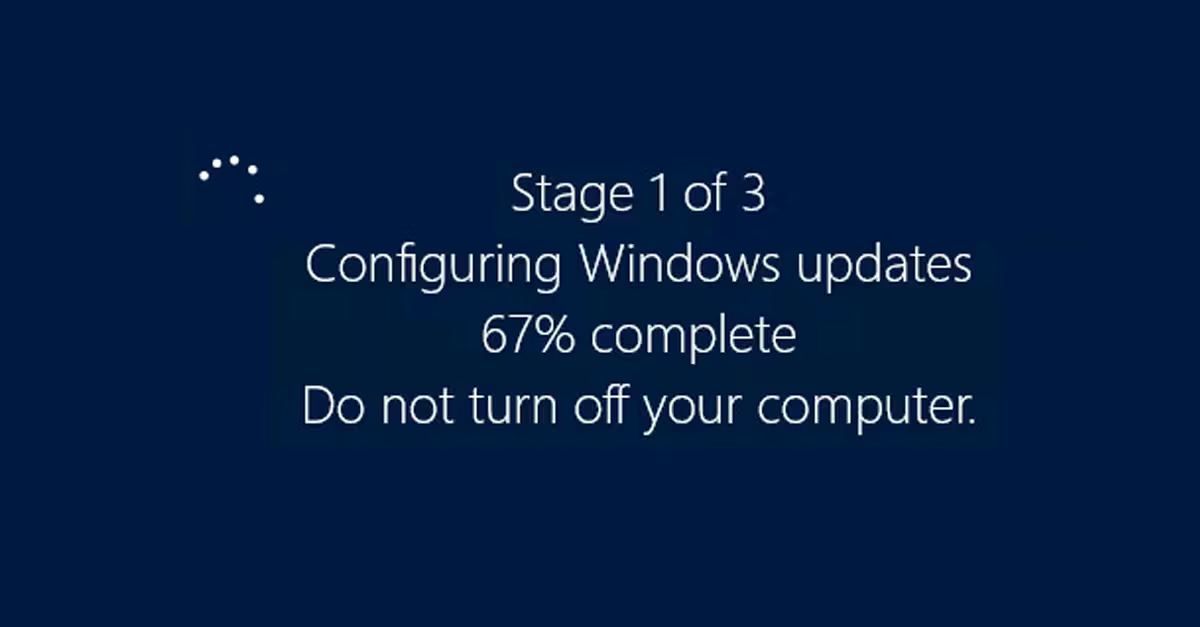
Software updates often contain security patches that fix vulnerabilities before hackers exploit them.
Best Practice
- Enable automatic updates where possible.
- Replace unsupported operating systems.
- Regularly update firmware for networking devices.
2. Use Strong Password Policies
Weak passwords remain one of the leading causes of successful cyberattacks.
Avoid passwords like:
- Password123, 123456, Password, Admin, Company2026
Instead, encourage employees to use:
- At least 14 characters
- Uppercase letters
- Lowercase letters
- Numbers
- Special characters
Examples:
- J7!Office&Cloud2026
- Secure#Network$45
Better yet, use password managers to generate and securely store unique passwords.
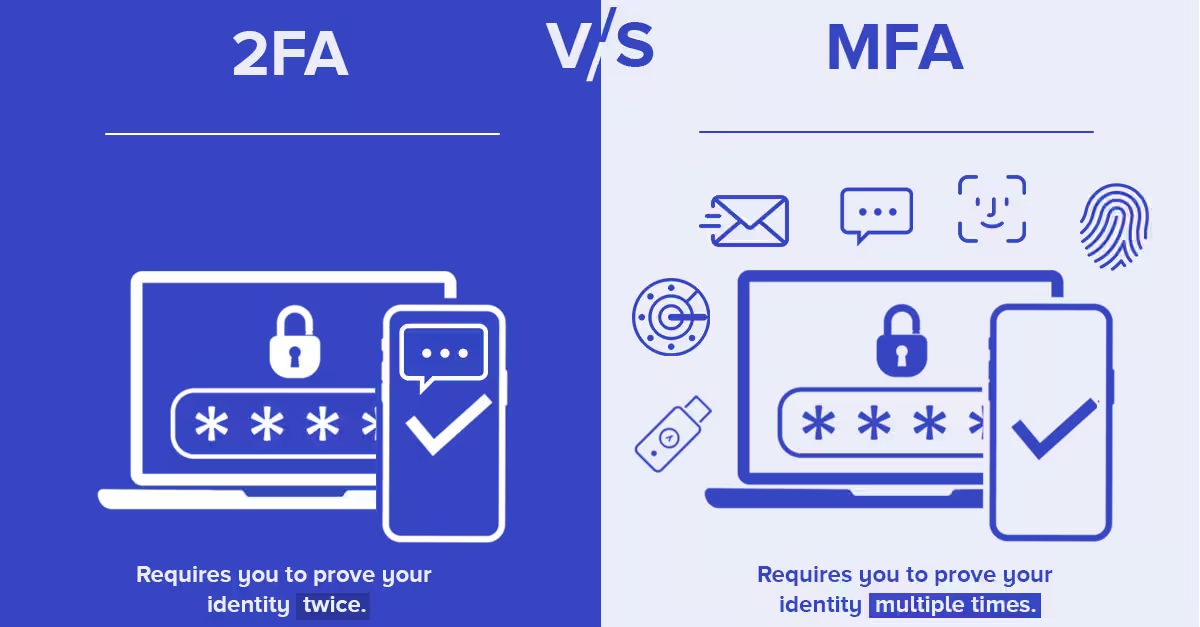
3. Enable Multi-Factor Authentication (MFA)
Passwords alone are no longer enough. Multi-factor authentication requires users to verify their identity using an additional method such as:
- Mobile authenticator apps
- Biometrics
- Security keys
- SMS verification (less preferred but most commonly implemented)
Even if attackers steal a password, MFA significantly reduces the chances of unauthorized access.
4. Train Employees Regularly
Technology alone cannot stop cybercrime. Human error remains one of the biggest security risks.
Employees should learn how to identify:
- Phishing emails
- Fake invoices
- Suspicious attachments
- Malicious links
- Social engineering attempts
- USB device attacks
Security awareness training should become part of your organization's culture rather than a one-time exercise.
5. Backup Business Data Frequently
Backups are your best defense against ransomware.
Maintain daily backups, weekly backups, and monthly archives.
Store backups in multiple locations (if and when possible):
- Local storage
- External drives
- Cloud backup
- Offline (air-gapped) backups
Regularly test backup restoration to ensure your data can be recovered quickly if disaster strikes.
6. Secure Your Computer Network
An unsecured network exposes your business to unauthorized access.
Important security measures include:
- Enterprise firewalls
- VLAN segmentation
- Secure Wi-Fi encryption
- VPN access for remote workers
- Network monitoring
- Intrusion detection systems
Professional network design minimizes attack surfaces while improving performance and reliability. Businesses benefit from ongoing monitoring and preventative maintenance to keep networks secure.
7. Install Reliable Endpoint Protection
Every device connected to your network is a potential entry point.
Endpoints include: desktop computers, laptops, smartphones, tablets and servers.
Modern endpoint protection should include:
- Antivirus
- Anti-malware
- Behavioral analysis
- Ransomware protection
- Device control
- Automatic threat detection
8. Limit User Access
Not every employee requires administrator privileges.
Follow the Principle of Least Privilege (PoLP) by assigning users access to what or where they are directly responsible:
- Finance staff access finance systems.
- HR staff access HR records.
- Sales teams access CRM software.
- IT administrators manage servers.
Restricting permissions significantly reduces damage if an account is compromised.
9. Protect Email Systems
Email remains the number one attack vector.
Implement:
- Spam filtering
- Anti-phishing protection
- Email authentication
- Attachment scanning
- Domain protection
Employees should verify unexpected payment requests or invoice changes through secondary communication channels.
10. Secure Remote Work
Remote work has expanded business flexibility but also introduced new security risks.
Remote employees should:
- Use VPNs
- Avoid public Wi-Fi
- Keep devices updated
- Enable device encryption
- Lock screens when away
Organizations should enforce remote access policies and monitor remote connections.
11. Monitor Your Network Continuously
Cybersecurity is an ongoing process—not a one-time setup.
Continuous monitoring helps detect:
- Unauthorized logins
- Unusual network traffic
- Malware activity
- Failed login attempts
- Data exfiltration
Early detection dramatically reduces the impact of cyber incidents.
12. Develop an Incident Response Plan
Every business should know exactly what happens when a cyberattack occurs.
Your response plan should define:
- Who responds
- Communication procedures
- System isolation
- Data recovery
- Customer notifications
- Business continuity procedures
Preparation reduces downtime and accelerates recovery.
Common Cyber Threats Businesses Face
Businesses today commonly encounter:
- Phishing attacks
- Business Email Compromise (BEC)
- Ransomware
- Malware
- Spyware
- Insider threats
- Credential theft
- Distributed Denial-of-Service (DDoS) attacks
- Supply chain attacks
Understanding these threats is the first step toward building effective defenses.
Benefits of Investing in Cybersecurity
Strong cybersecurity provides tangible business benefits:
- Reduced downtime
- Improved customer trust
- Regulatory compliance
- Protection of sensitive data
- Lower recovery costs
- Increased employee productivity
- Business continuity
- Competitive advantage
Rather than being an expense, cybersecurity is an investment in operational resilience and long-term growth.
How Orvex Solution Can Help
Cybersecurity requires expertise, proactive management, and the right technology. At Orvex Solution, we provide comprehensive IT security services tailored to businesses of all sizes.
Our solutions include:
- Network security implementation
- Firewall configuration
- Secure Wi-Fi deployment
- Computer networking
- Server installation and maintenance
- Endpoint protection
- IT infrastructure support
- Preventive maintenance
- Managed IT services
- Security assessments
- Business technology consulting
Whether you're building a new network or strengthening your existing IT environment, our experienced technicians work closely with you to implement reliable, scalable, and secure solutions that support your business goals.
Conclusion
Cyber threats continue to evolve, but so do the tools and strategies available to defend against them. By following cybersecurity best practices, such as keeping systems updated, using strong authentication, training employees, securing networks, and maintaining reliable backups, you can dramatically reduce your organization's risk.
The most effective cybersecurity combines modern technology with knowledgeable IT support. Investing in proactive security today helps protect your business from costly disruptions tomorrow.
If you're looking to strengthen your organization's cybersecurity posture, Orvex Solution is ready to help with professional IT services, network security solutions, and ongoing technical support tailored to your business needs.